Text size
Line height
Text spacing
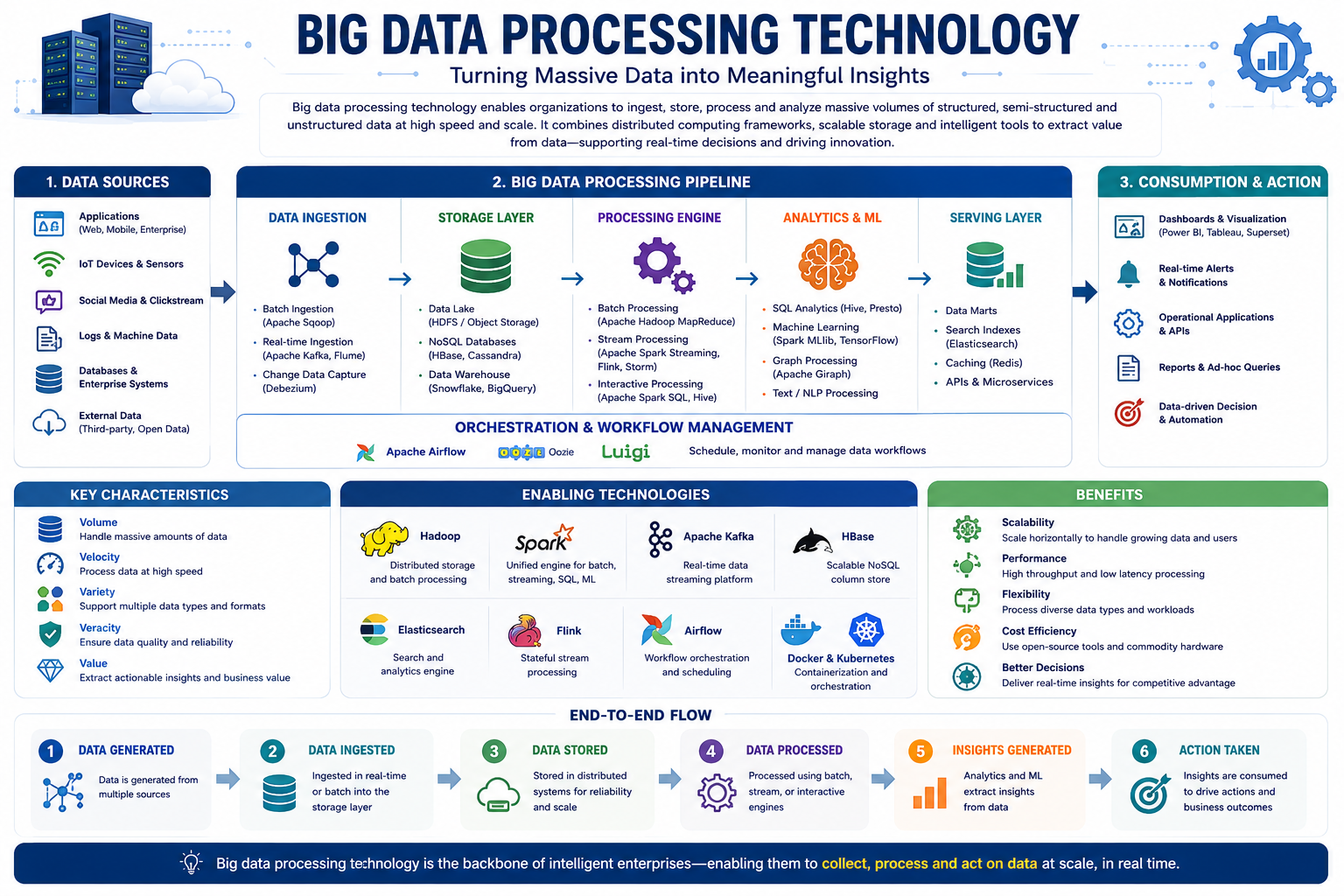
The slides outline the five essential stages required for efficient big data processing, beginning with the extraction and validation of information from various sources. It details how data is transformed into usable formats and loaded into centralized systems before being analyzed through visualization and business intelligence tools. The final phase emphasizes the role of machine learning, explaining how supervised, unsupervised, and reinforcement learning help automate pattern recognition and predictive modeling.
The provided video explores the essential structure and logic behind the MapReduce architectural model. It outlines the fundamental principles that govern how the system processes large-scale data across distributed networks. By examining the individual components that make up the framework, the text illustrates how hardware and software work in tandem. Additionally, the source addresses the programming methodologies required to implement and manage these complex data tasks. Overall, the documentation serves as a comprehensive guide to understanding the internal mechanics of this data processing technology.
The provided text outlines the core structural and operational elements of the MapReduce architecture. It highlights the fundamental conceptual theories that underpin this specific data processing model. Additionally, the source identifies the physical components required to build and maintain the system's infrastructure. It also addresses the software development side by focusing on the specialized programming techniques used within the framework.
The slides is continuing the first part slides. Overall, these excerpts serve as a foundational guide for understanding how the technology organizes and executes large-scale tasks. Through these three focus areas, the material offers a comprehensive look at the mechanics of distributed computing.
In this assessment, students need to be able to explaining in detail the core concept and architectural components of the MapReduce programming model.