Text size
Line height
Text spacing
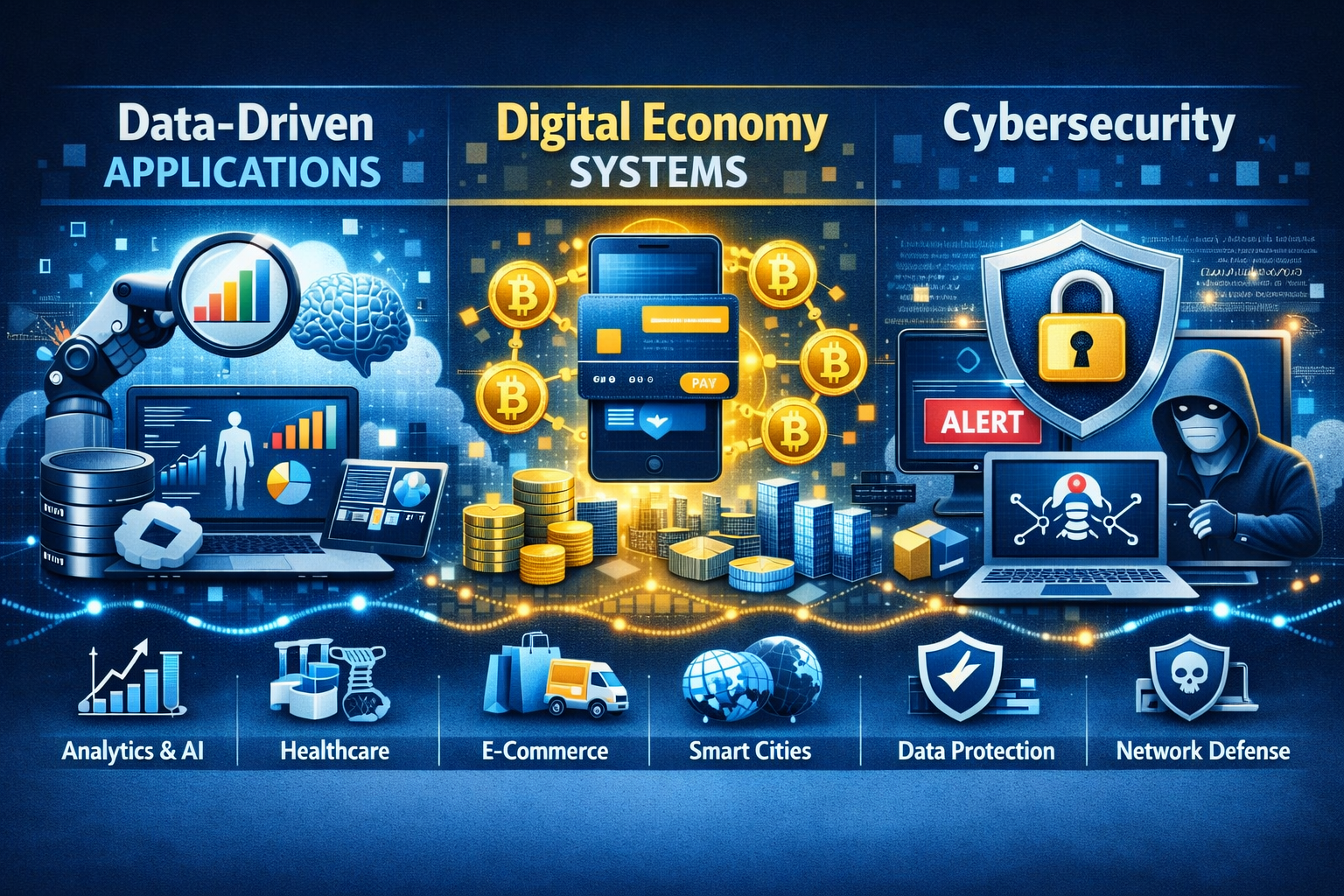
This section focuses on building things with that data (Applications), understanding the broader marketplace where it operates (Digital Economy), and defending it all from attacks (Cybersecurity).
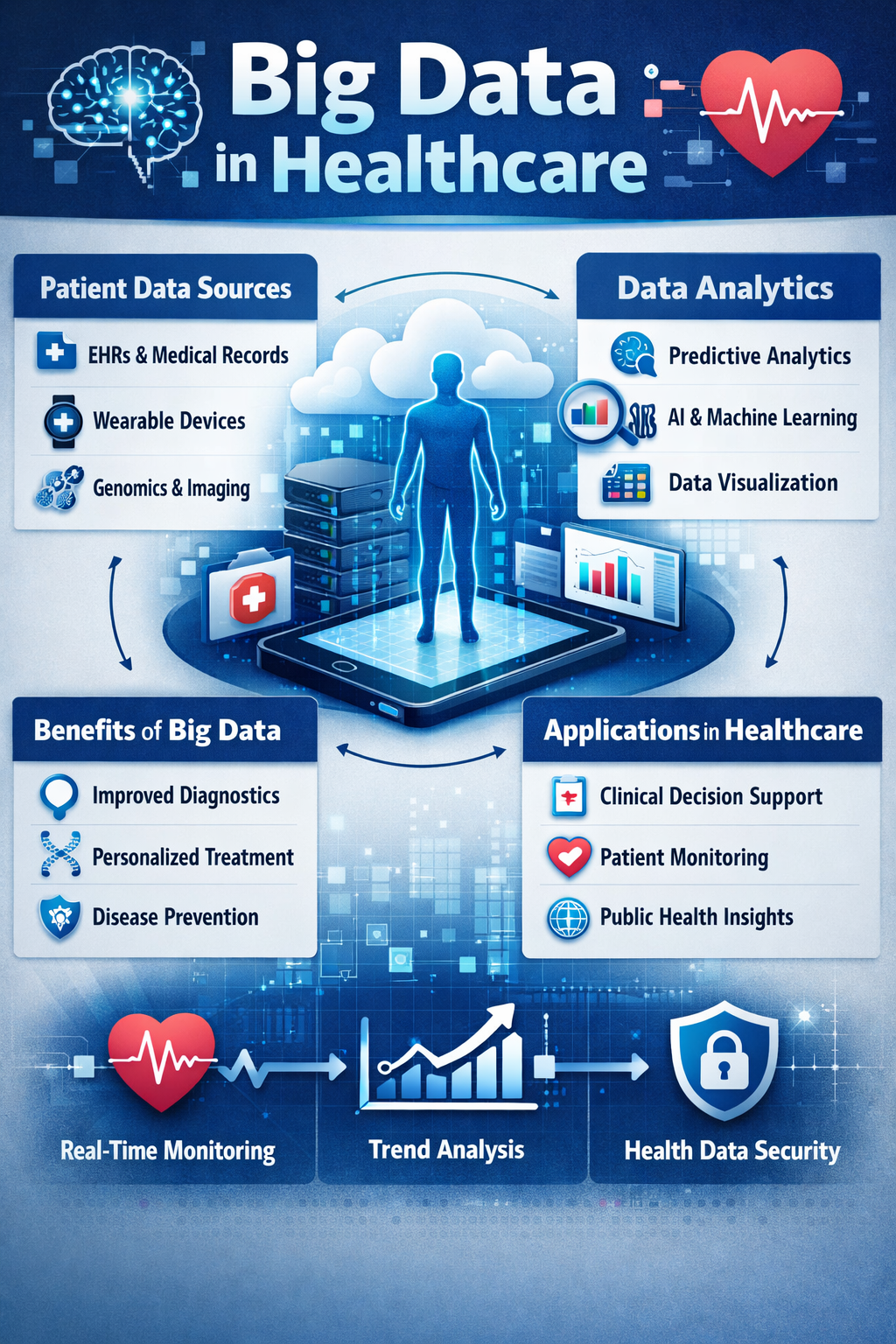
Big Data in Healthcare refers to the massive volume of health-related information collected from various sources such as electronic health records (EHRs), medical imaging, genomic data, wearable devices, and patient feedback that can be analyzed computationally to reveal patterns, trends, and associations, especially relating to human health and disease.
Modern healthcare is being transformed by Big Data, which involves managing massive and complex sets of medical information through the lenses of volume, velocity, variety, and veracity. To process this information, institutions utilize advanced tools like cloud computing, artificial intelligence, and interoperability standards to bridge the gap between different software systems.
In this assessment, students need to be able to address the unique issues and challenges regarding data privacy, standardization, and regulatory compliance.
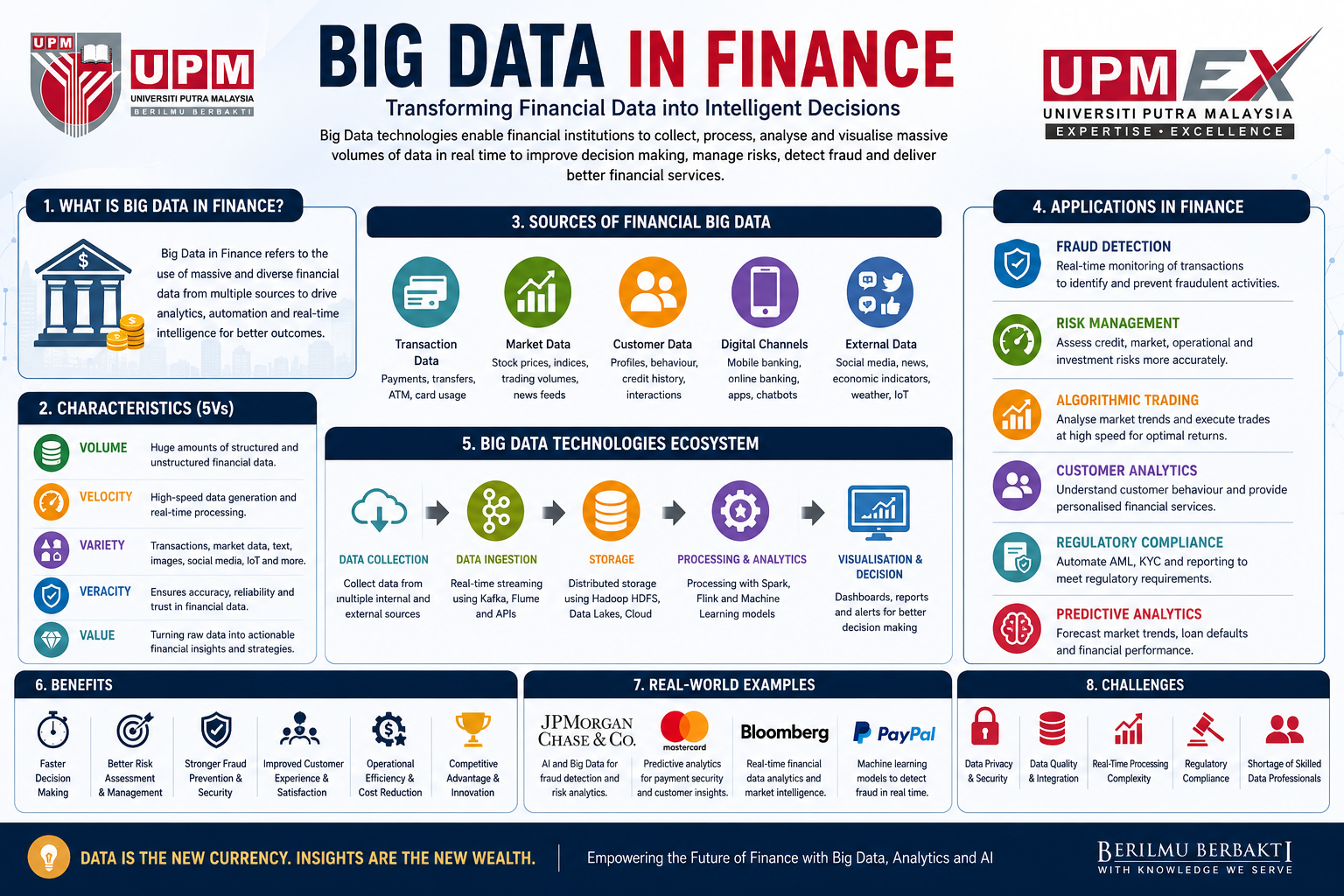
Modern financial institutions leverage Big Data and machine learning to transform traditional banking into a high-speed, intelligent ecosystem. By processing diverse information from market feeds and consumer behavior, organizations can detect fraudulent activities and manage complex financial risks in real time.
The purpose of this assignment is for the student to examine how big data analytics drives innovation within the Financial Technology (Fintech) sector and the broader digital economy.
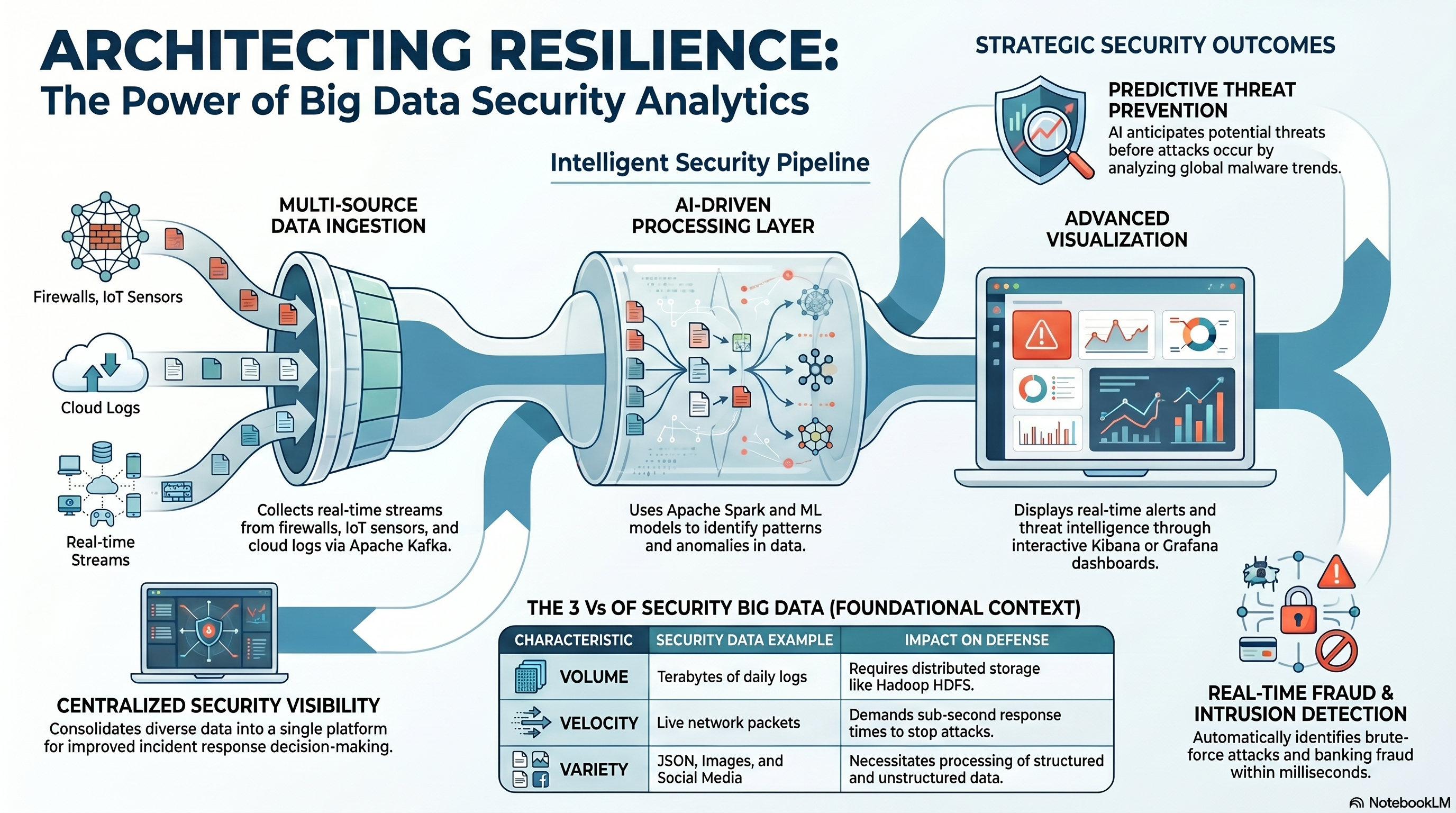
This section provides the knowledge about the integration of big data analytics and artificial intelligence within the modern cybersecurity landscape to combat sophisticated digital threats. These technologies allow organizations to process massive datasets from diverse sources, enabling real-time monitoring, anomaly detection, and automated incident responses.
In the modern enterprise landscape, security is no longer just a technical operational challenge—it is a massive data management challenge. As organizations scale their digital footprints across multi-cloud environments, remote workforces, and global networks, they generate terabytes of security telemetry every single day. Legacy Security Information and Event Management (SIEM) systems are fundamentally collapsing under the financial weight and processing demands of this data explosion, leaving organizations blind to sophisticated, slow-moving cyber threats.
To survive this shift, modern security leaders must transition from traditional, reactive security monitoring to proactive Big Data Security Governance. This requires a strategic blend of enterprise architecture, strict data compliance, and advanced analytics capable of finding patterns across billions of disparate events.