9. Chapter 9: Peer-to-peer networks
9.11. Overlay Networks
Overlay
Networks
1.
2.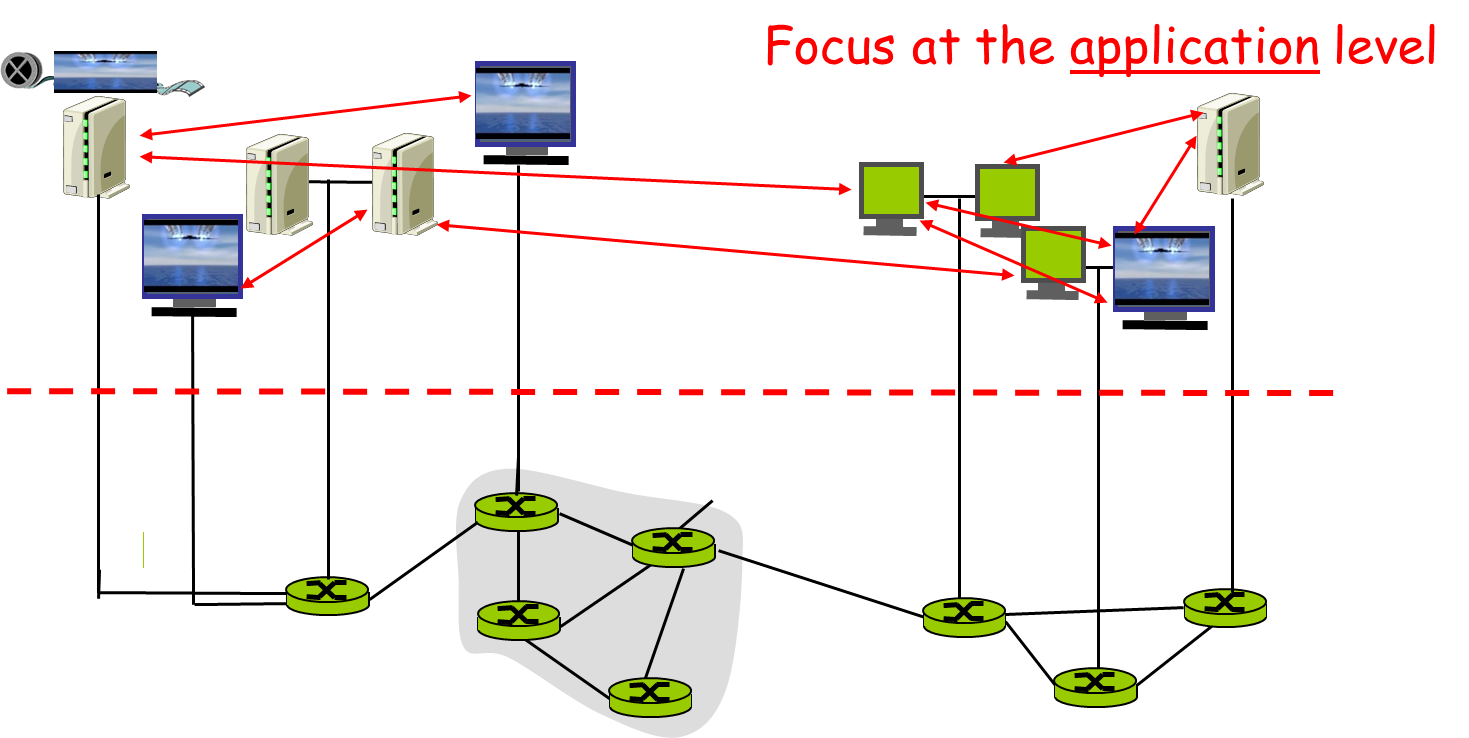
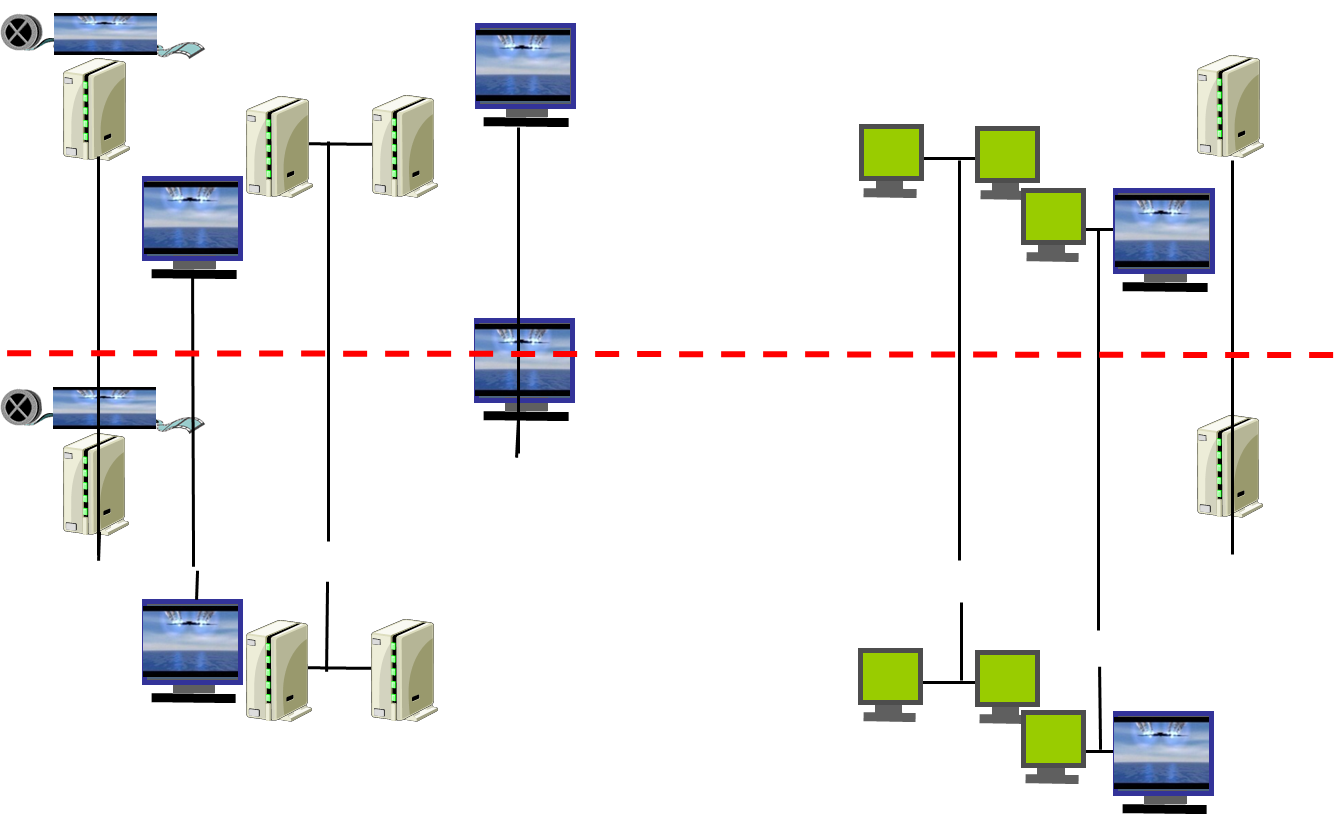
A logical network built on top of a physical network
- Overlay links are tunnels through the underlying network
Many logical networks may coexist at once
- Over the same underlying network
- And providing its own particular service
Nodes are often end hosts
- Acting as intermediate nodes that forward traffic
- Providing a service, such as access to files
Who controls the nodes providing service?
- The party providing the service (e.g., Akamai)
- Distributed collection of end users (e.g., peer-to-peer)
Overlays
P2P systems possess some degree of self-organization
- each node finds its peers and helps maintain the system structure
Two types of overlays connect most P2P systems
Unstructured
- No infrastructure set up for routing
- Random walks, flood search
Structured
- Small World Phenomenon: Kleinberg
- Set up enough structure to get fast routing
- We will see O(log n)
- For special tasks, can get O(1)
Overlays:
Unstructured
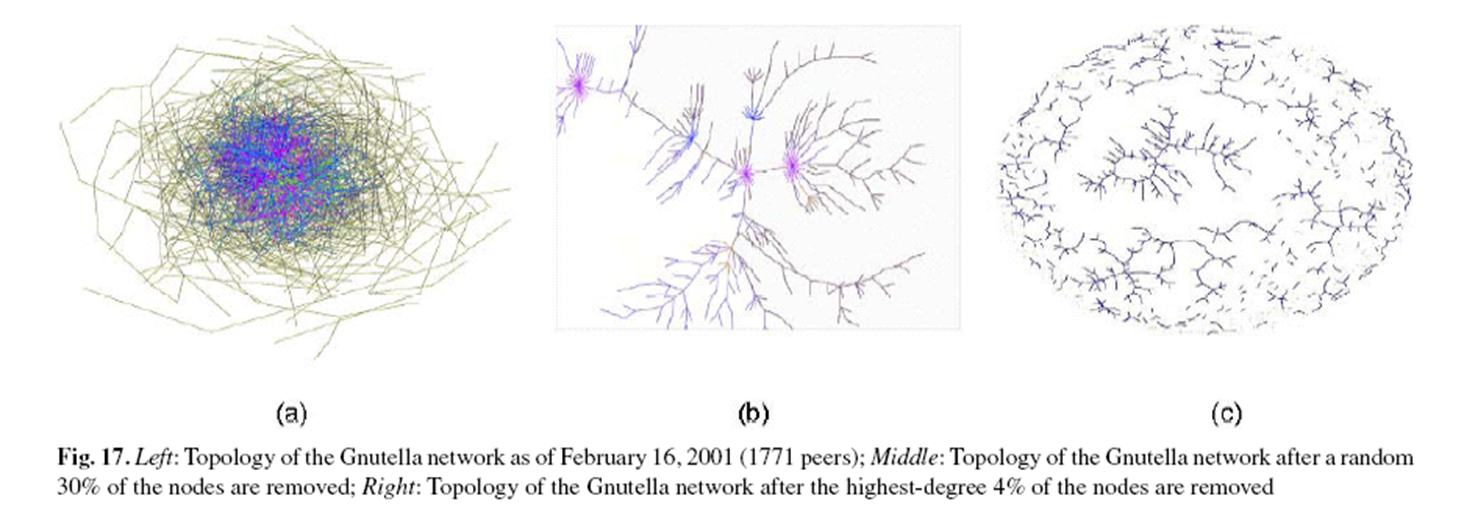
From Gribble
- a common unstructured overlay
- look at connectivity
- more structure than it seems at first
Gossip: state synchronization technique
- Instead of forced flooding, share state
- Do so infrequently with one neighbor at a time
- Original insight from epidemic theory
Convergence of state is reasonably fast
- with high probability for almost all nodes
- good probabilistic guarantees
Trivial to implement
- Saves bandwidth and energy consumption
Overlays:
Structured
Need to build up long distance pointers
- think of routing within levels of a namespace
- eg. namespace is 10 digit numbers base 4
- then you can hop levels to find other nodes
This is the most common structure imposed