9. Chapter 9: Peer-to-peer networks
9.5. P2P: searching for information
Index
in P2P system: maps information to peer location
(location
= IP address & port number)
Peer-to-Peer
Networks:
Napster
Napster history: the rise
- January 1999: Napster version 1.0
- May 1999: company founded
- September 1999: first lawsuits
- 2000: 80 million users
Napster history: the fall
- Mid 2001: out of business due to lawsuits
- Mid 2001: dozens of P2P alternatives that were harder to touch, though these have gradually been constrained
- 2003: growth of pay services like iTunes
Napster history: the resurrection
- 2003: Napster reconstituted as a pay service
- 2006: still lots of file sharing going on
Napster
Technology: Directory Service

- User installing the software
- Download the client program
- Register name, password, local directory, etc.
- Client contacts Napster (via TCP)
- Provides a list of music files it will share
- … and Napster’s central server updates the directory
- Client searches on a title or performer
- Napster identifies online clients with the file
- … and provides IP addresses
- Client requests the file from the chosen supplier
- Supplier transmits the file to the client
- Both client and supplier report status to Napster
Napster
Technology: Properties
- Server’s directory continually updated
- Always know what music is currently available
- Point of vulnerability for legal action
- Peer-to-peer file transfer
- No load on the server
- Plausible deniability for legal action (but not enough)
- Proprietary protocol
- Login, search, upload, download, and status operations
- No security: cleartext passwords and other vulnerability
- Bandwidth issues
- Suppliers ranked by apparent bandwidth & response time
Napster:
Limitations of Central Directory
- Single point of failure
- Performance bottleneck
- Copyright infringement
- So, later P2P systems were more distributed
P2P:
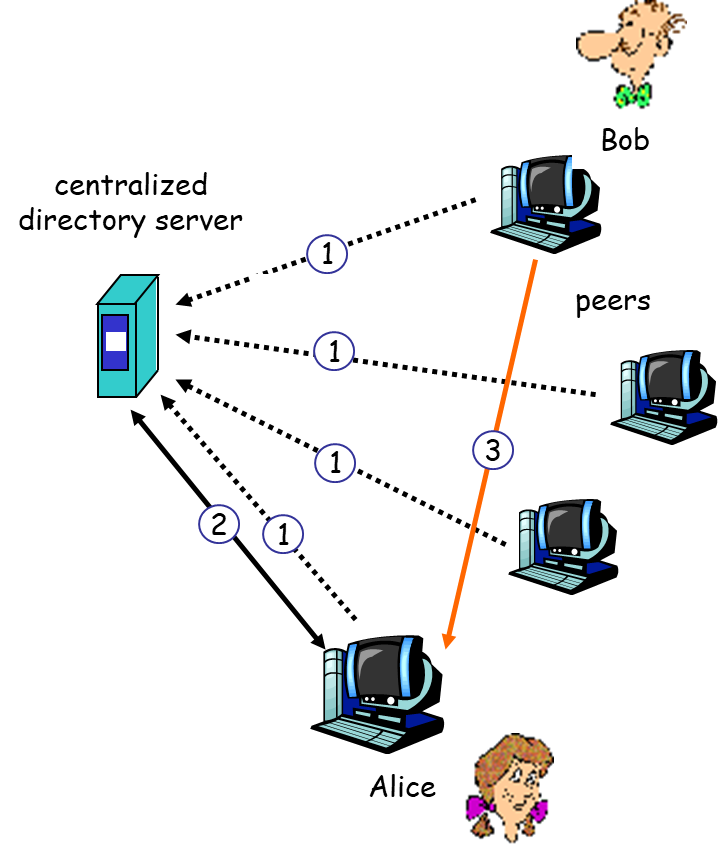
centralized index
original “Napster” design
- when peer connects, it informs central
server:
- Alice queries for “Hey Jude”
- Alice requests file from Bob
- single point of failure
- performance bottleneck
- copyright infringement: “target” of lawsuit is obvious